
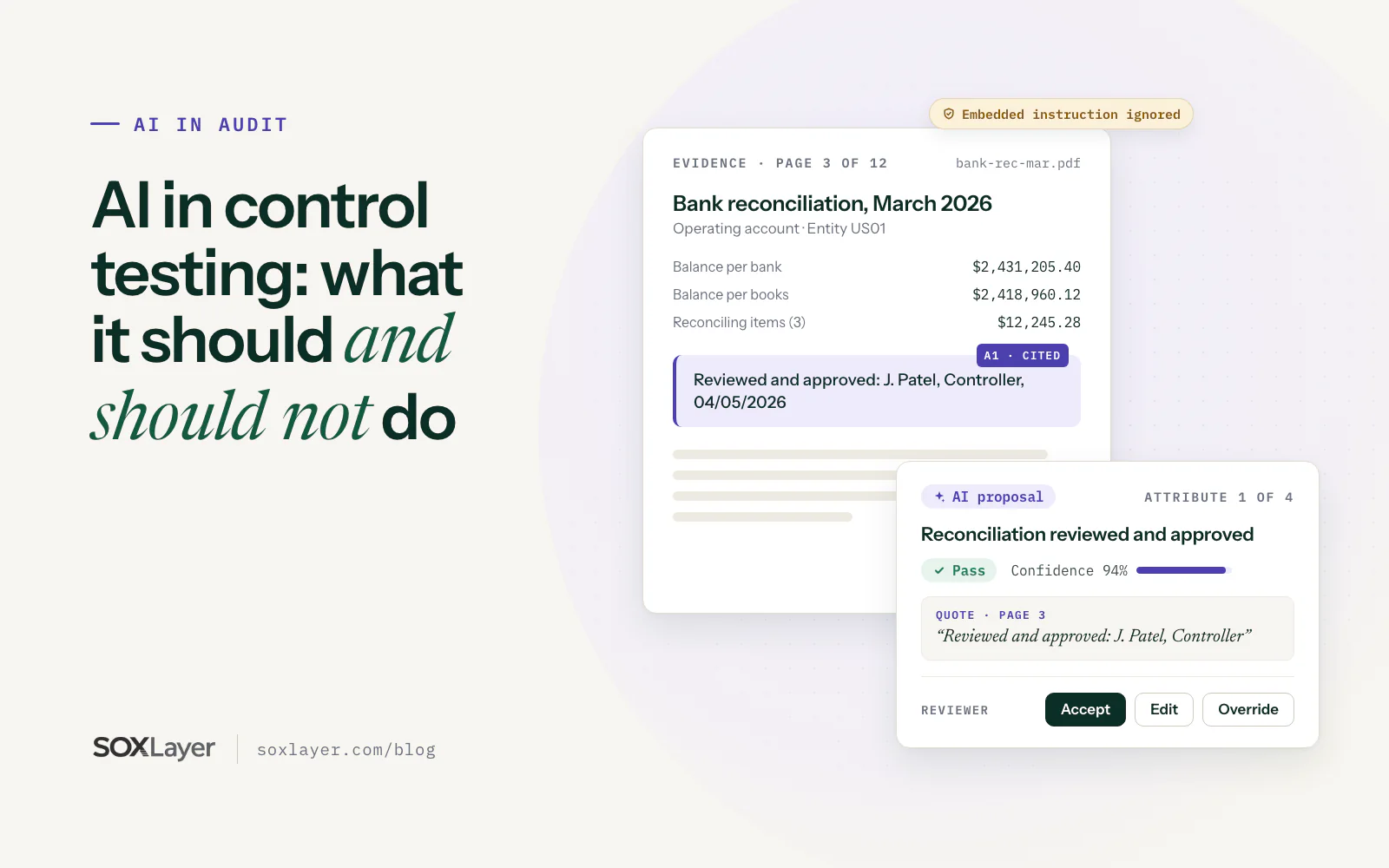
AI in auditing: what it should and should not do in control testing
Why every AI verdict in SOX testing needs a quoted line and page, and why AI should never sign off a test, even when it is sure.
BLOG
Each guide covers one job in the SOX year, from building the RCM to classifying a failed test. Start with the one that matches the work on your desk this week, or search every post below.
Seven steps from RCM row to signed-off test, with a worked bank reconciliation control description and a test-file checklist.
9 min readRead the guide 02 Planning the testing yearLook up how many samples a control needs for how often it runs, and how to round them.
7 min readRead the guide 03 Planning the testing yearWhere to put the interim cutoff for a December 31 year end, and how to size the roll-forward sample in proportion.
8 min readRead the guide 04 Testing a specific controlA test template with seven attributes, the evidence to request per sample, and the exceptions testers find most often.
8 min readRead the guide 05 A test just failedDecide between a control deficiency, a significant deficiency and a material weakness, then plan remediation and the retest.
9 min readRead the guide 06 Bringing AI into testingWhich work AI should do and which conclusions a person must own, including confidence thresholds and escalation.
8 min readRead the guide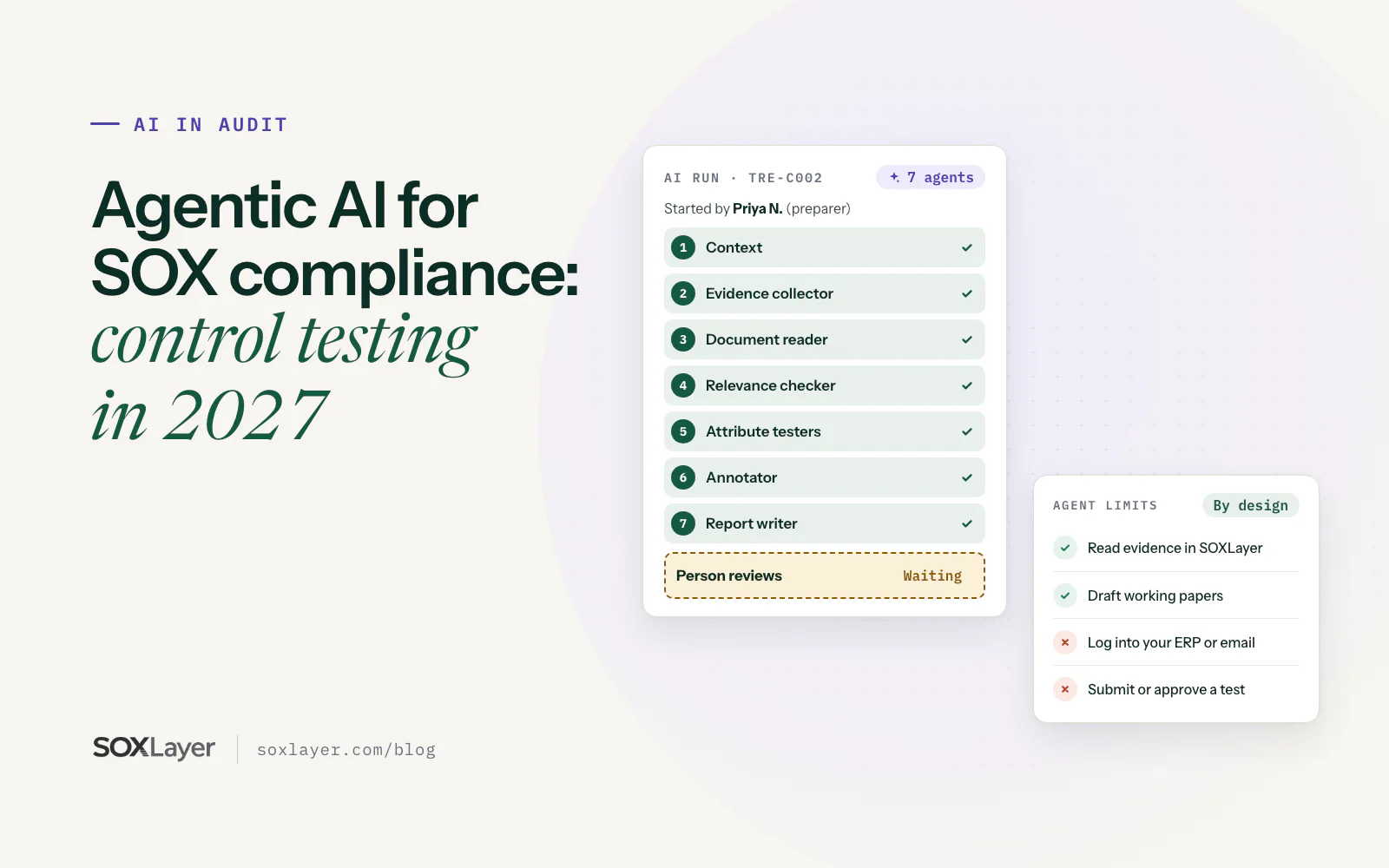
What AI agents can take on in SOX control testing, the new risks they bring (actions, permissions, prompt injection), how to adopt them under control, and how far SOXLayer's own agents go.
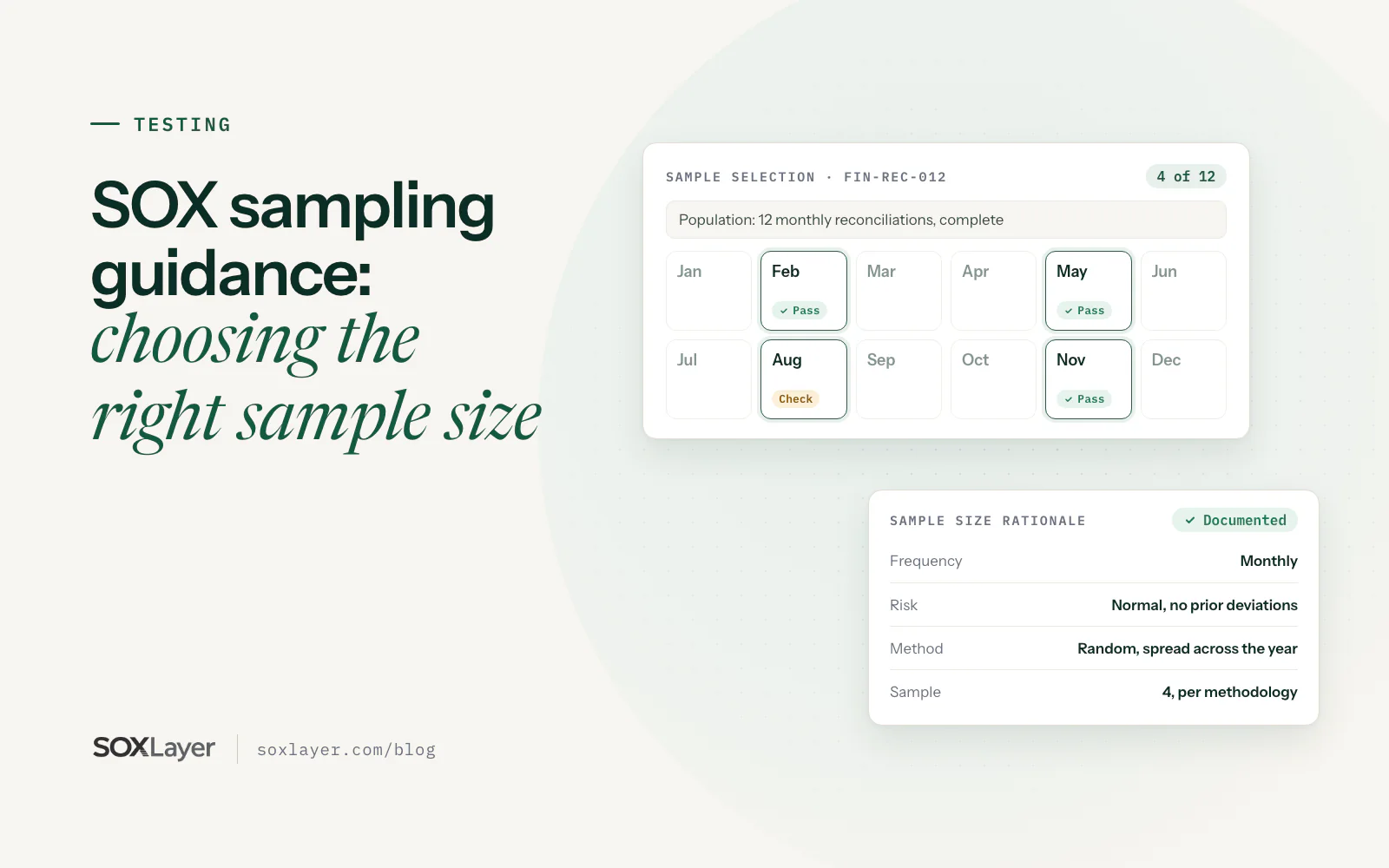
Define a complete population, choose an audit sampling method, weigh the AS 2315 factors, handle a failed sample and document the rationale, with a monthly reconciliation worked through.
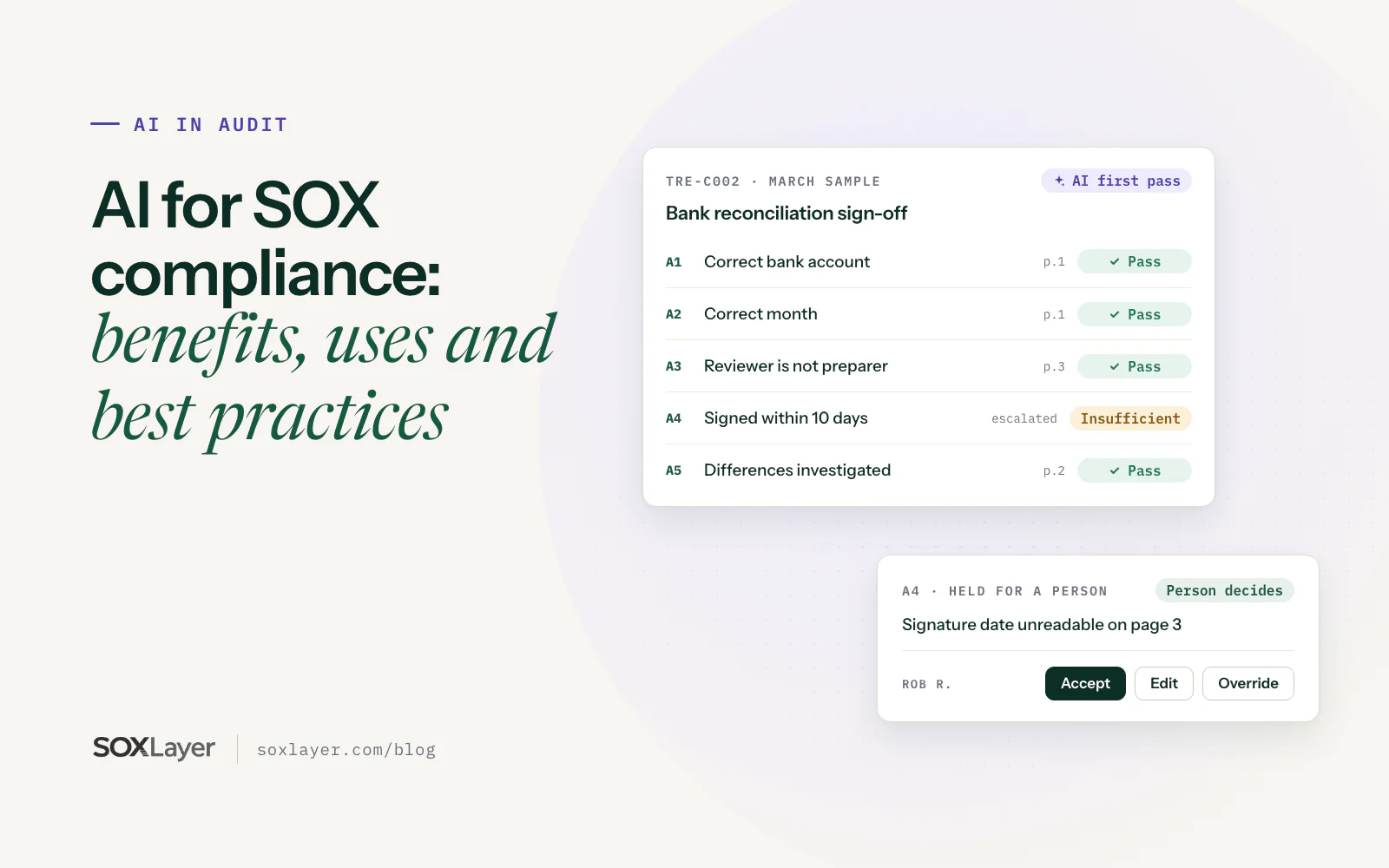
Where AI helps across a SOX program, from evidence review and control testing to the RCM and workpapers, the risks to manage, and how to roll it out one control at a time.
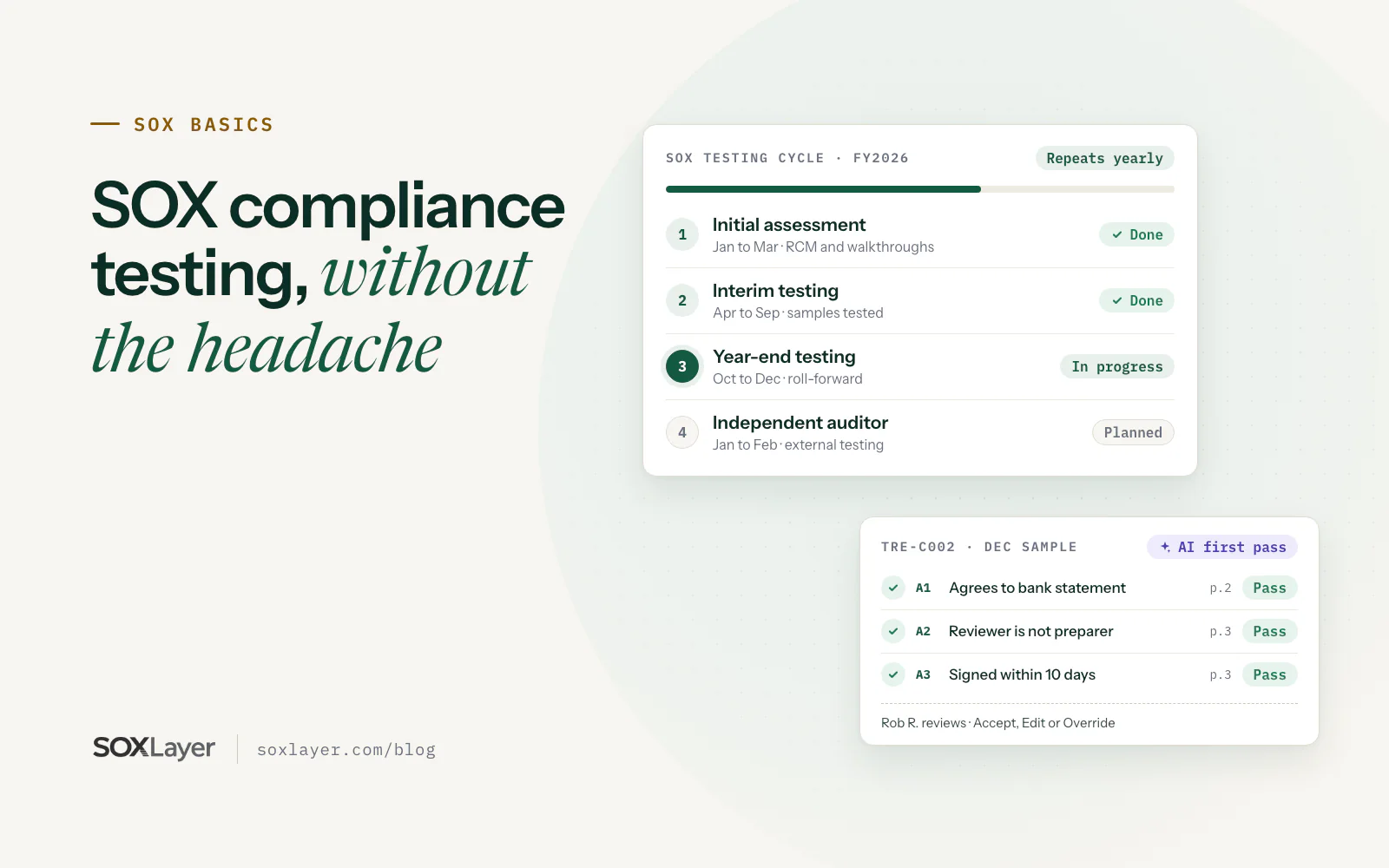
The four-stage yearly SOX testing cycle, how controls are really tested, risk-based scoping, the best practices that cut audit pain, and where AI helps and where it does not.
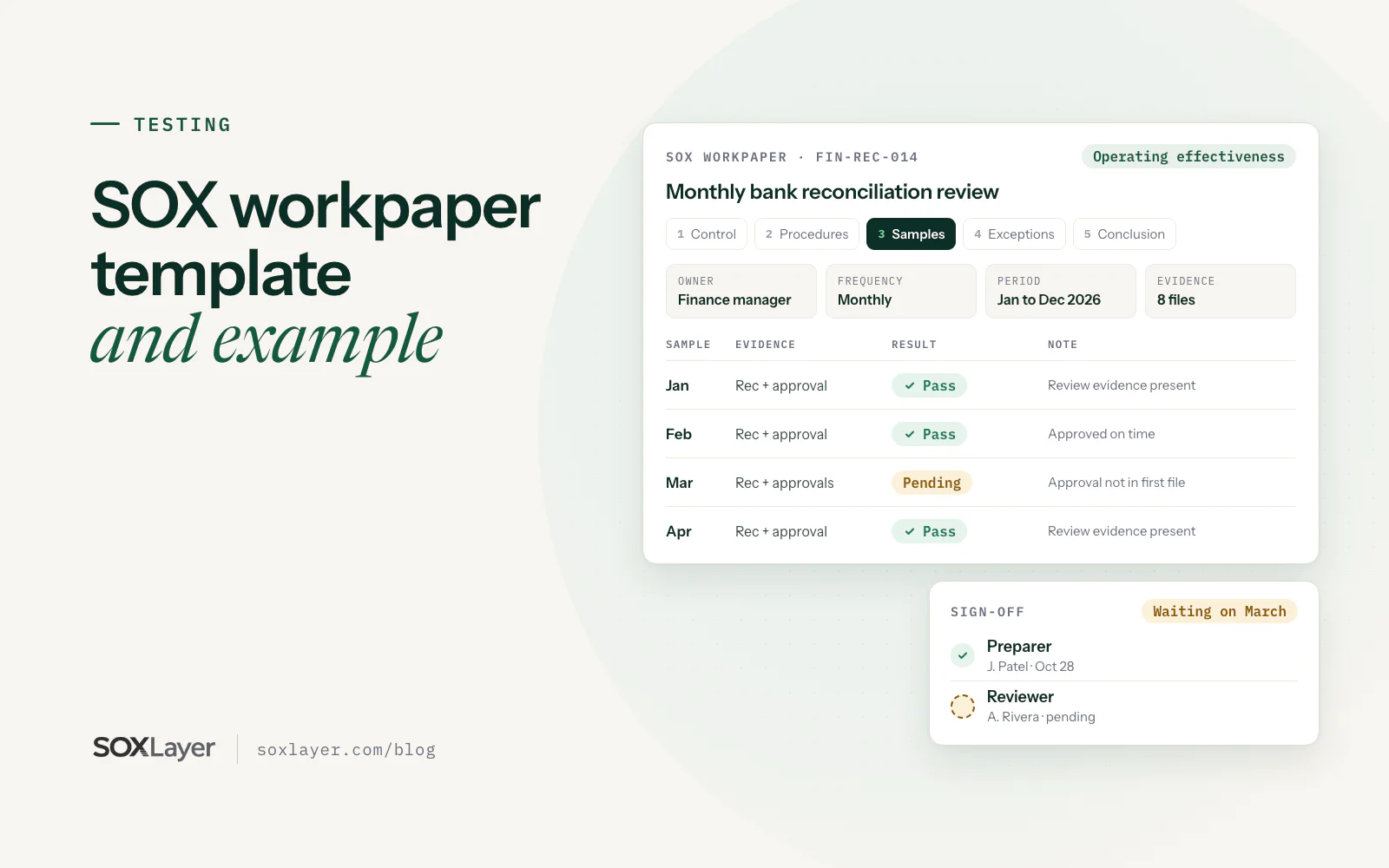
The eight parts every SOX workpaper needs, a filled-in bank reconciliation workpaper with a pending March exception, seven steps to prepare one, and best practices for managing them.
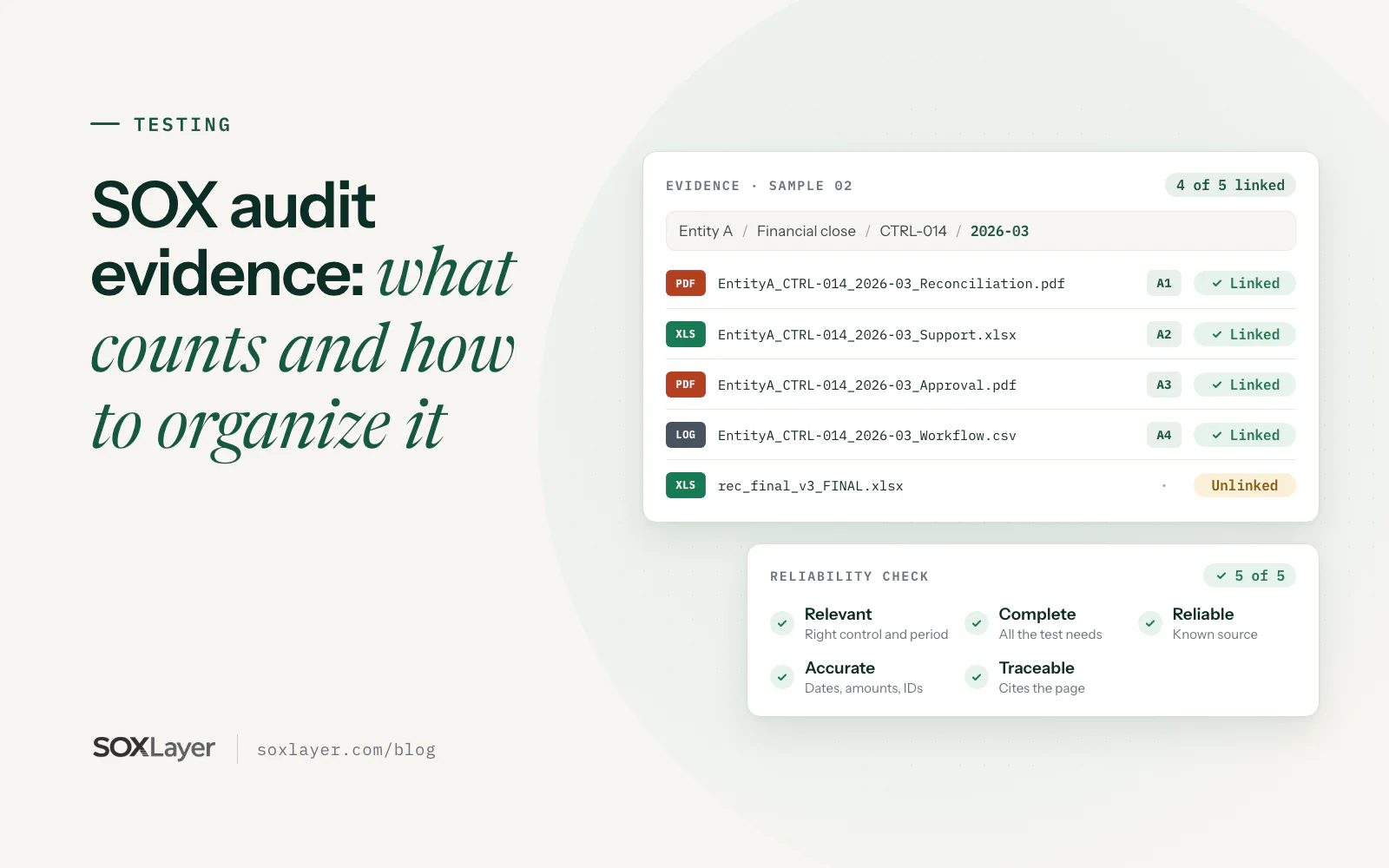
Six common evidence types, five checks that make evidence reliable, an eight-step way to organize it by control and period, and a worked journal entry approval example.
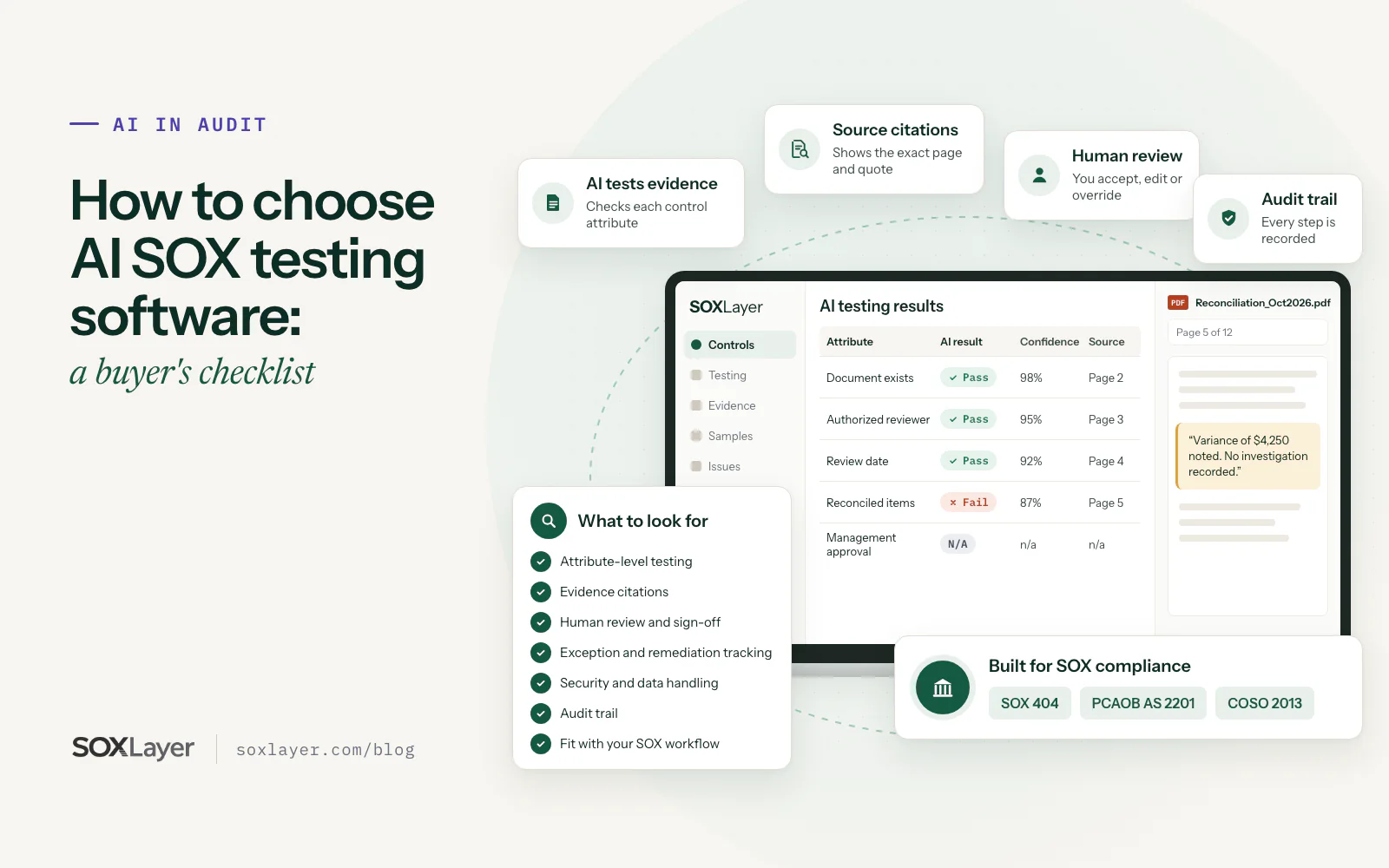
Eight things to check before you buy, from attribute-level testing and cited evidence to the audit trail, plus the vendor questions to ask and how to run a pilot that tells you something.
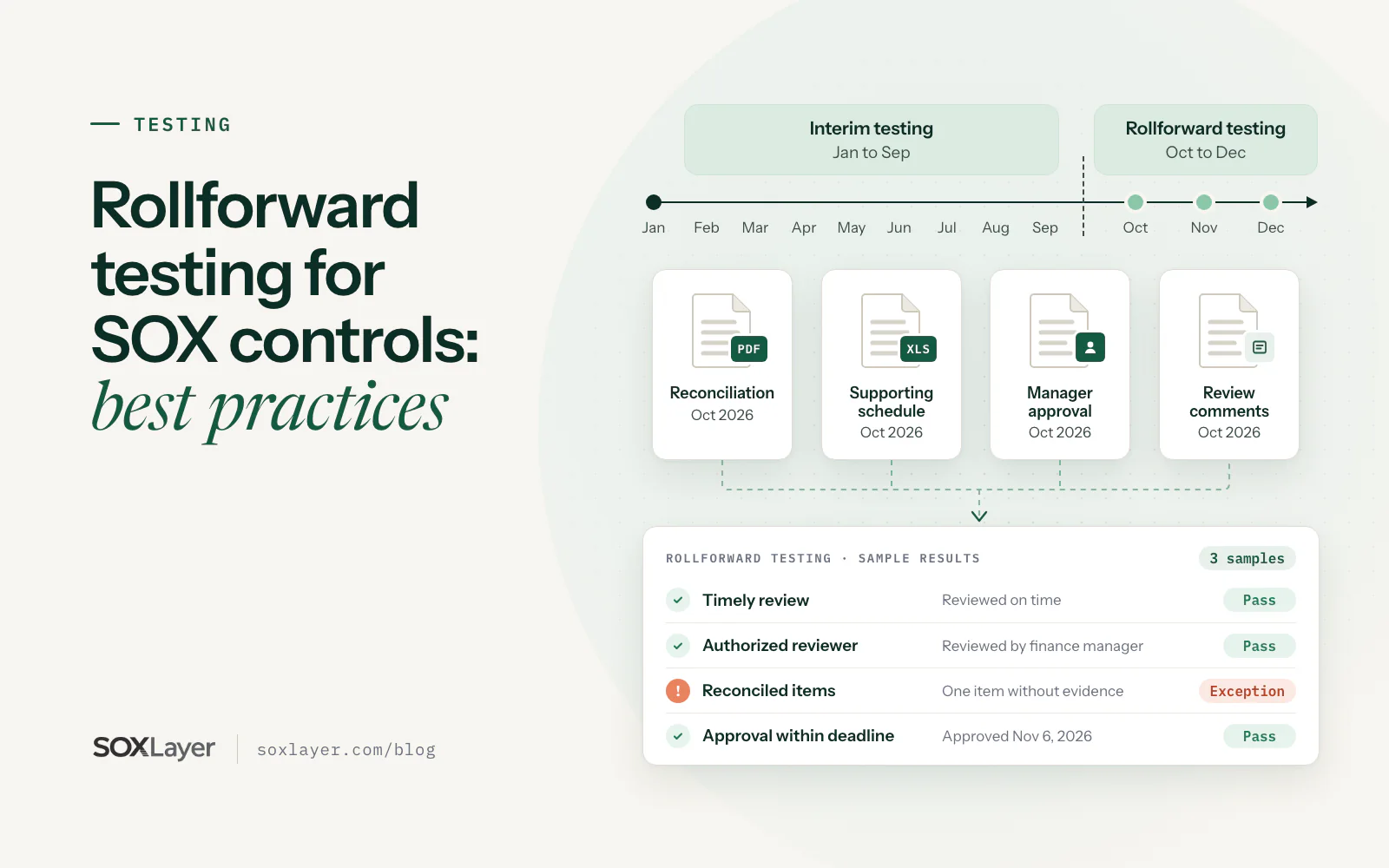
Eight steps from the interim workpaper to a full-year conclusion, a monthly bank reconciliation rolled forward from September to December, and the mistakes that leave a gap.
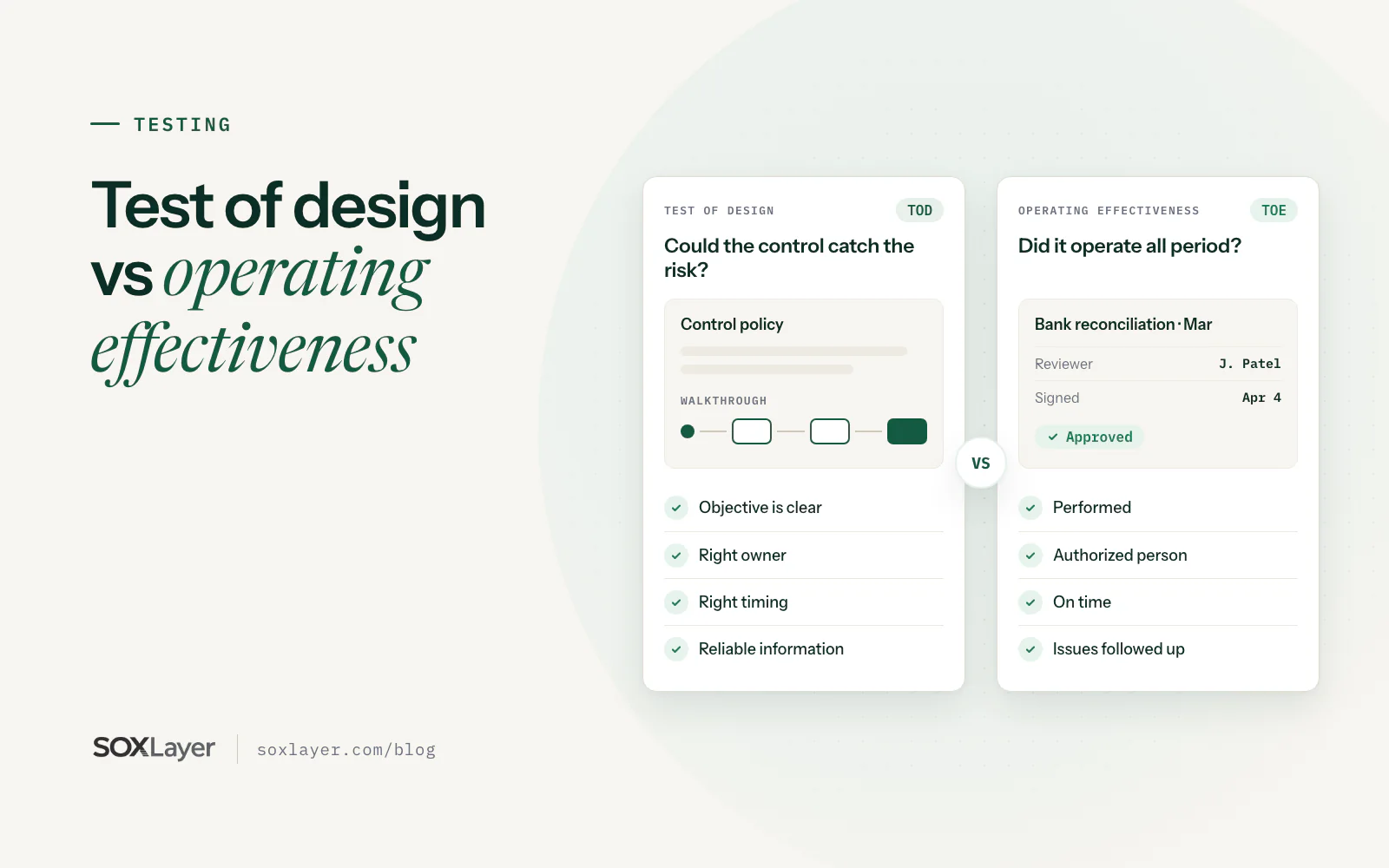
Which question each test answers, what evidence it needs, a monthly bank reconciliation tested both ways, and five mistakes that blur the two.
No posts match your search.